
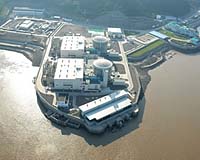
Nuclear power can help reduce carbon dioxide emissions and provide reliable electricity in the future, but the technology must first win a battle for public opinion, the International Energy Agency said on Tuesday. Nuclear power has two main advantages over rival energy sources, the IEA said, namely that it produces no greenhouse gas emissions and only requires uranium as a resource, which is found in abundance in stable, democratic countries.
"These two advantages make nuclear power a potentially attractive option for enhancing the security of electricity supply — if concerns about plant safety, nuclear waste disposal and the risk of proliferation can be solved to the satisfaction of the public," the IEA said.
Interest in nuclear energy has spiked owing to sharp rises in gas and oil prices in the last three years, with China, the US, India, Russia, Britain, France and Finland all looking at it with renewed interst.
"Concerns over energy security, surging fossil fuel prices and rising carbon dioxide emissions have revived discussion about the role of nuclear power," the IEA said.
Under IEA forecasts based on current trends, the proportion of energy generated from nuclear power is set to fall in the period to 2030, assuming few new reactors are built and several existing ones are retired.
Overall nuclear power generation capacity is set to increase to 368 gigawatts in 2005 to 416 gigawatts in 2030, but this is below growth in demand.
Under a different scenario mapped out by the IEA, which assumes more favourable policies from national governments, nuclear power could rise to 519 gigawatts by 2030, resulting in an increase in its share in the energy mix and significant fall in emissions.
"Nuclear power could help address concerns about over-reliance on fossil-fuelled electricity generation, especially worries about climate change and increasing dependence on gas imports", the IEA said.
Source: Agence France-Presse
