
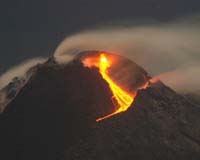
Residents evacuated from the slopes of Indonesia's fuming Mount Merapi are returning to their homes despite increasing signs of an imminent eruption, officials said Wednesday.
The conical 2,914-meter (9,560-foot) Merapi, towering over the fertile Kedu plain in Central Java, has been on "standby" alert status for more than three weeks. One step higher requires the mandatory evacuation of all residents.
Thousands had already voluntarily evacuated to shelters in areas considered safer as the volcano began oozing lava and spewing smoke but were now returning home in growing numbers, despite an ongoing threat to their safety.
"The problem is that Merapi's activities have been going on for some time, and despite what we and other authorities have been telling them, they now believe that there will be no eruption," said Edy Susanto, head of the welfare office at Magelang district — one of the five districts surrounding Merapi.
Officials said that in total around 1,000 people previously in shelters had returned home.
In Sleman district, some 2,600 displaced people remained in shelters but returned home during the day, Tanto of the district welfare office told AFP.
Geologists said that Merapi was continuing to show increasing activity. On Tuesday, a total of six shallow volcanic temblors were recorded compared to two a day earlier, while there were 152 quakes caused by lava movements compared to 102 the previous day.
A new lava dome at the peak of Mount Merapi was continuing its rapid growth but Muzani from the vulcanology office in Yogyakarta, some 30 kilometers (18 miles) south of the volcano, said it was still stable.
A collapse of the lava dome would send lava and deadly heatclouds speeding down the slope, geologists have warned, rather than a massive explosion.
Merapi's most deadly eruption occurred in 1930, when 1,369 people were killed.
Indonesia sits on the Pacific "Ring of Fire" noted for its volcanic and seismic activity. The country has more than 100 active volcanoes.
Source: Agence France-Presse
