
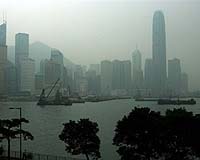
Hong Kong on Thursday laid out a series of proposals to tackle the city's poor air quality, but the move drew criticism from environmental groups who said new targets did not go far enough.
Environment Secretary Edward Yau unveiled the targets to reduce pollutants like sulphur dioxide, nitrogen dioxide and particulates. If implemented, they would be the first new air quality targets in Hong Kong since 1987.
"In setting the new Air Quality Objectives, the underlying principle is to protect public health," he said, launching a four-month public consultation on the proposals.
In order to meet the targets, Yau unveiled a series of recommendations.
These include replacing coal in power stations with cleaner burning natural gas, increasing the use of electric and hybrid vehicles and introducing pedestrian zones in the city.
Pollution has become an increasing health and economic headache for the Hong Kong authorities in recent years.
Emissions from southern China's factory belt and local pollution from power plants and transport combined for much of last year to generate a thick haze over the city.
But campaigners said the new targets would not tackle the problem.
"Overseas governments with far cleaner air protect public health by setting and enforcing tough standards and tight timelines to drive down emissions," said Mike Kilburn, environmental programme manager at think tank Civic Exchange.
"The proposed (objectives) are neither tough nor enforceable, and there is no timeframe."
Joanne Ooi, from Clean Air Network, described as a "red herring" the fact that the new targets were set up with reference to World Health Organization (WHO) guidelines.
"In 2006, only 41 days per year were decently healthy by WHO standards," she said.
"Despite referencing the WHO's air quality guidelines, some of the new (targets) only pay lip service to public health by actually permitting emissions greater than current levels."
Share This Article With Planet Earth
