
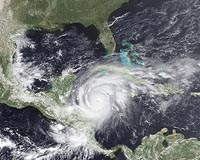
New research suggests a massive plume of freshwater from Hurricane .
Last month, monitoring buoys measured a 10 percent drop in salinity at the Flower Garden Banks National Marine Sanctuary, located 100 miles off the coast of Galveston, Texas.
"The salinity at one buoy on the reef dropped from 36 to 32 on Sept. 28, but it rebounded to 36 by Oct. 4, and it has been between 35 and 36 since then," Rice marine biologist Adrienne Correa said in a news release. "We don't yet know what impact the low salinity had on the reef while it was there."
Correa is one of several scientists preparing to take an expedition cruise to the sanctuary's coral reefs and survey the possible damage caused by dramatic swings in salinity.
Researchers suspected severe flooding that hit Houston in April of 2016 — and the subsequent runoff — was responsible for a coral reef die-off observed in the sanctuary shortly afterwards.
"In late July 2016 there was a partial die-off on the East Flower Garden Banks," said Correa. "We didn't know it was happening until a recreational dive boat happened to go out there and see it. Because we didn't know about the risk ahead of time, we couldn't sample on a timeline that made it easy to figure out a mechanism for the die-off."
This time around, scientists will have a more accurate "before" assessment of the reef's health.
Researchers are hopeful that the majority of the freshwater plume missed the gulf's most vulnerable reefs and that currents will continue to steer the water away from the most at-risk ecosystems. But it's possible even an indirect hit could have dropped the sanctuary's salinity to dangerously low levels. In addition to the drop in salinity, runoff can warm local water temperatures and carry harmful pollutants.
"When people look at the impact of hurricanes on coral reefs, they often look at physical damage or breakage of reef frameworks by waves and storm surge," Correa said. "Much less is known about the impacts of freshwater influx from the precipitation associated with a hurricane."
Damage to local reefs can disrupt local food chains and ecosystems. Loggerhead sea turtles, manta rays, snapper, grouper, mackerel and even whale sharks frequent the reefs.
Reef damage can also make coastlines more vulnerable to the next hurricane. In Florida, damages to local reefs have made parts of the coast more vulnerable to storm surges.
Expanded bluefin tuna quotas could reverse recovery: scientists
Eastern Atlantic bluefin tuna's spectacular recovery will be reversed if the region's 51-nation fisheries management body embraces quota recommendations finalised late Friday by its scientific advisory panel, scientists at the meeting warned.
The warm-blooded, fatty fish – which can grow to the size of a small car, and swim nearly as fast – underpins a billion-dollar business and is a culi … read more
