
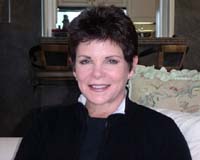
Hewlett-Packard chairwoman Patricia Dunn announced her resignation Tuesday after the US technology giant was engulfed in an espionage scandal that could lead to prosecutions. Dunn, who took over last year as non-executive chairwoman after the stormy reign of Carly Fiorina, apologized after private detectives that she had hired to investigate boardroom leaks to the media "went beyond" their mandate.
HP said that its chief executive officer and president, Mark Hurd, would succeed Dunn as chairman at a board meeting on January 18. Dunn will continue to serve as a director.
"I am taking action to ensure that inappropriate investigative techniques will not be employed again. They have no place in HP," Hurd said in a statement.
The California state attorney general's office and federal prosecutors are investigating whether HP's private eyes broke the law by impersonating board members and journalists to get private telephone records.
California Attorney General Bill Lockyer has vowed to prosecute wrongdoers at HP at the end of his investigation.
The company said it was "cooperating fully" with the inquiries but Dunn has denied authorizing illicit tactics.
"Unfortunately the investigation, which was conducted with third parties, included certain inappropriate techniques," she said.
"These went beyond what we understood them to be, and I apologize that they were employed."
The world's second-largest personal computer maker now faces a new period of top-level change after Dunn, 53, had steadied the ship following the controversial leadership of Fiorina, who clashed repeatedly with the board in her five years as both chairwoman and CEO.
Unlike its rival Dell, HP has posted strong earnings growth this year and its share price has climbed about 30 percent since Fiorina's departure. HP's stock closed Tuesday up 1.54 percent at 36.92 dollars.
HP's board met over Sunday and Monday to decide Dunn's fate as the scandal escalated. She had hired the detectives to ferret out who had been leaking information from board meetings to the press.
The private investigation identified a board member as the suspected leak, but did so by getting telephone records with a ruse known as "pretexting," calling the telecom company and posing as customers.
While no law on the California books specifically outlaws "pretexting," state prosecutors believe the deception violated laws regarding identification theft and unauthorized access to computer data.
Silicon Valley venture capitalist Thomas Perkins, who resigned from the HP board in protest at the leak probe tactics, had called for Dunn to resign.
Dunn has claimed that Perkins advocated strong investigative techniques such as lie detector tests, and that his change of heart came only after the leaker was fingered as his friend, George Keyworth.
Keyworth said Tuesday he also resigning from the board. He admitted to being the source of a CNET.com article about HP in January, but denied that his comments involved "the disclosure of confidential or damaging information."
HP's incoming chairman vowed to turn a new page.
"The company will work to put these matters behind us so that we fully resume our focus on the business and continue to earn the trust and support of our customers, employees and stockholders," Hurd said.
Dunn insisted the investigation that she launched was merited, even if the subsequent tactics were not.
"I am very proud of the progress HP has made over the past 18 months," she added, promising an orderly transition and "to improve our corporate governance standards" during the rest of her term.
Fiorina, who engineered the controversial takeover of PC group Compaq, was ousted in February 2005 as chairwoman and chief executive of Hewlett-Packard over major differences with the company's board. She had been the only woman to head one of the 30 blue-chip Dow Jones industrials.
Source: Agence France-Presse
