
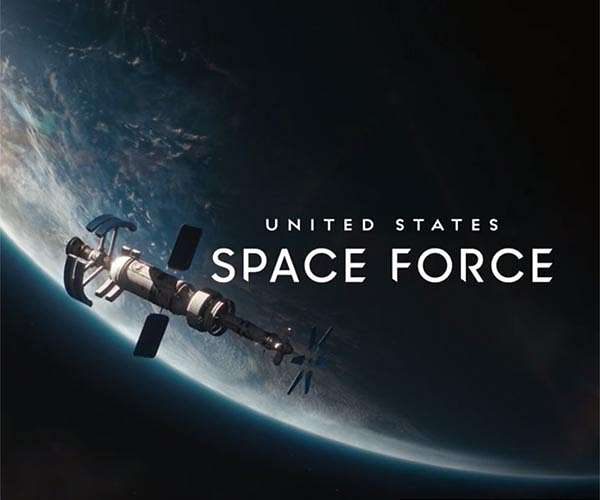
The United States Space Force (USSF) is a new military branch of the U.S. Armed Forces. It was established on December 20, 2019 as part of the National Defense Authorization Act for 2020. Although the USSF is the smallest armed service, there are more than 2,500 personnel who operate 77 spacecraft, including the Boeing X-37B and the Global Positioning System.
The mission of the USSF is to assure freedom of sustained operations in space, and access to and from space. In other words, the mission is to protect the space-related interests of the U.S.
This includes deterrence of aggression in the space domain. Last August, the Space Force released its capstone doctrine, Spacepower, which enumerates the missions and duties of the new service. In summary, the three cornerstone responsibilities of the USSF are:
+ Provide freedom of action in the space domain
+ Enable joint lethality and effectiveness
+ Provide independent options for achieving national objectives
In order to achieve these responsibilities, five core competencies have been identified:
+ Space security
+ Combat power projection
+ Space mobility and logistics
+ Information mobility
+ Space domain awareness
All of these requirements beg the question of how to implement the systems that enable the Space Force's responsibilities. Obviously, complex ground-based installations can satisfy much of the mission. But, there appears to be some gaps in capabilities without space-based installations, as well.
Should the USSF be planning a human military presence in space? So far there has been no urgent or justifiable argument for an in-orbit armed "fort." However, space has become much more congested and contested with potentially aggressive intentions.
Russian "inspector" satellites are already threatening the tenuous stand-off stability between adversarial spacefaring nations, for example, such inspection satellites have been positioned near U.S. national security spacecraft.
In 2020, Time Magazine reported the first public comment by a U.S. official regarding this type of Russian satellite activity. Such actions reflect a growing concern that other nations are turning space into a warfighting domain.
Several years ago, in another instance of threatening behavior, a mysterious Russian military satellite parked itself between two Intelsat satellites in geosynchronous orbit. This situation lasted for five months. The Russian satellite was launched in September 2014, and seven months later was positioned directly between Intelsat 7 and Intelsat 901 satellites.
At that time these two spacecraft were located just 0.5 degrees apart in longitude. During the standoff the Russian satellite maneuvered to within about 10 kilometers of the Intelsat vehicles, close enough to create a potential risk to the satellites.
Many members of the space community believe this incident is the first publicly documented event in which a commercial operator has been subject to this kind of approach by a foreign military satellite. Unfortunately, commercial space operators do not have much recourse other than to ask the government for help.
One conclusion based on these events is that the Russians have been performing dress rehearsals for wartime attacks on U.S and other national space assets. Clearly, space-based assets dedicated to national security are an important part of deterrence to war.
However, it is extremely difficult to protect military satellites from warmongering spacefaring adversaries. If a ground war starts between major spacefaring nations, in orbit response assets could quickly be neutralized.
It would appear that evolving in-space technologies may well soon compel major space powers to develop crewed military space stations capable of stalking and neutralizing adversarial in-orbit assets, if needed.
