
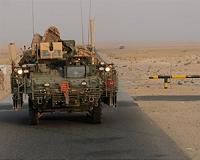
Foreign troop numbers in Iraq fell by a quarter during 2018, Prime Minister Adel Abdel Mahdi said, as the fallout fizzled from Washington's announcement it was withdrawing from neighbouring Syria.
"In January 2018 there had been almost 11,000 foreign fighters, about 70 percent of them are American, the others are from other countries," Abdel Mahdi told a weekly press briefing on Tuesday evening.
"In December, the numbers have been reduced to almost 8,000, and the American troops are around 6,000… maybe I am wrong by some hundreds."
Abdel Mahdi said that more than 12 months after the government declared victory over the Islamic State group in Iraq, the drawdown was accelerating.
"In recent months, the decrease has sped up and in the last two months there was a drop of 1,000 forces," he said.
US President Donald Trump has said that US troops will remain in Iraq after the withdrawal of all troops from Syria and will be available to take action against IS on the other side of the border if necessary.
US troop numbers in Iraq peaked at some 170,000 during the battle against Al-Qaeda and other insurgents that followed the US-led invasion of 2003.
Trump's predecessor Barack Obama ordered a withdrawal that was completed in 2011, but in 2014 ordered a new deployment as part of a US-led coalition battling IS, which had proclaimed a "caliphate" in large swathes of Iraq and Syria under its control.
IS is now confined to a shrinking enclave of just 15 square kilometres (under six square miles) in eastern Syria not far from the border where Kurdish-led forces have been engaged in a major offensive with coalition support since May last year.
In Iraq, the jihadists maintain sleeper cells in the cities and hideouts in sparsely populated desert and mountain areas from which they carry out periodic hit-and-run attacks, some of them deadly.
Iran FM says Tehran wants to rebuild Iraq after IS fight
Karbala, Iraq (AFP) Jan 16, 2019 –
Iranian firms should have a key role in rebuilding Iraq after the fight against the Islamic State group, Tehran's top diplomat said Wednesday in a rare meeting with Iraqi paramilitary units.
Foreign Minister Mohammad Javad Zarif spoke in Iraq's holy city of Karbala to commanders of the Hashed al-Shaabi, which is dominated by Iran-backed Shiite groups opposed by Washington.
"The world has realised the truth — that the US wasn't the one who defeated Daesh (IS). You were, and that's why they exerted pressure on you and on us," he told gathered commanders in Farsi.
After IS overran nearly a third of Iraq in 2014, the Hashed's auxiliary units partnered with Iraqi forces for three years to fight the jihadists.
Many Hashed factions receive military and political support from Iran.
Some commanders have been blacklisted by the US, which also reimposed tough sanctions on Iran last year after pulling out of an international deal on Tehran's nuclear programme.
Now, as Iraq looks to rebuild, Zarif said Iranian firms should be favoured because of his country's support and the complex logistics of partnering with Western companies.
"If a European or American company comes to Iraq to do rebuilding activities, the costs of protecting their workers and staff in Iraq exceeds its contract for reconstruction," he told commanders.
But an Iranian company could help rebuild at "low cost" and without security concerns, after having "stood alongside the Hashed".
IS and the battle to defeat it ravaged swathes of Iraq and shattered its economy. Last year, Baghdad said its 10-year reconstruction plan will cost an estimated $88.2 billion.
One Hashed commander said his units were grateful to Iran.
"The main reason Iraq could persevere in the face of terrorism is the fact that Iran stood by its side. Everyone rejects America's entry into Iraq," said Abu Ammar Al-Jubury.
Zarif spoke to the commanders on his fourth day in Iraq, where he has met top officials in Baghdad and the Kurdish city of Arbil, and attended a trade summit.
Iran is the second-largest source of imported goods in Iraq.
Besides canned food and cars, Baghdad also buys 1,300 megawatts of electricity and 28 million cubic metres of natural gas daily from Iran to feed power plants.
As tensions between the US and Iran escalate, Iraq has played a careful balancing act to maintain ties to both.
