
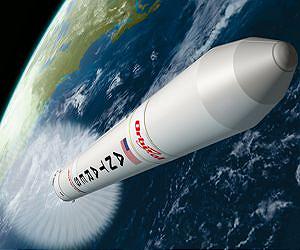
The Center for the Advancement of Science in Space (CASIS), the nonprofit organization managing research onboard the International Space Station (ISS) U.S. National Laboratory, congratulates Orbital Sciences on a successful launch of the Antares rocket and the berthing of the Cygnus cargo vehicle to the International Space Station.
Orbital's successful mission also represents a milestone for CASIS: The first-ever CASIS-funded payloads have now arrived at the ISS. Orbital's Cygnus cargo capsule berthed with the station Sunday morning.
In addition to fostering science and commercial payloads, CASIS is responsible for developing partnerships with organizations such as the Student Spaceflight Experiments Program (SSEP), designed to bring young students closer to the ISS.
On its maiden test flight, the Cygnus capsule transported three CASIS-funded education payloads from the SSEP. CASIS is a national partner for SSEP, whose mission is to energize students, grades 5 through 12, to design and propose real experiments to fly in low Earth orbit, onboard the ISS.
The CASIS educational vision is to use the discovery potential of the ISS to create a generation empowered to build a better future for humankind.
"This marks a significant and historic moment for CASIS, with our first funded payloads reaching the ISS," said CASIS executive director, Col. Gregory H. Johnson.
"It is also fitting that our first funded research that is investigated on the ISS comes from student inquiry, as one of the main goals for CASIS is to promote STEM initiatives that will incite the minds of tomorrow's scientific leaders. In the coming months, we look forward to additional payloads being sent to station that will demonstrate the broad scientific scope that CASIS seeks to utilize all throughout humankind's greatest technical platform." Additionally, the first CASIS-sponsored software was uploaded to the ISS National Lab.
Windows on Earth, developed by TERC, will enhance and adapt software for astronauts replacing the previous multi-step process for targeting, photographing and geo-referencing images from the ISS. Orbital Sciences is currently slated to send additional CASIS-sponsored research inquiries to the ISS as early as December.
