
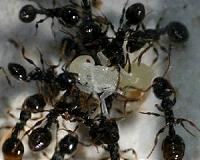
A new study from Emory and Case Western universities found that compounds from fire ant venom could reduce skin thickening and inflammation in psoriasis.
Psoriasis is an autoimmune skin disease that is treated with topical sterioids that can cause skin thinning and bruising.
Researchers used mouse models of psoriasis to test the compound solenopsin, the main toxic component in fire ant venom, which chemically resemble ceramides, the lipid-like molecules necessary for maintaining the barrier function of skin.
The study, published today in Scientific Reports, showed solenopsin decreased skin thickness from psoriasis 30 percent compared to control groups.
"We believe that solenopsin analogs are contributing to full restoration of the barrier function in the skin," Dr. Jack Arbiser, professor of dermatology at Emory University School of Medicine, said in a press release. "Emollients can soothe the skin in psoriasis, but they are not sufficient for restoration of the barrier."
Researchers created two solenopsin analogs that resemble ceramides but can't degrade into S1P, or sphingosine-1-phosphate, that can convert ceramides into an inflammatory molecule.
Researchers found that the mice treated with solenopsin analogs also had 50 percent fewer immune cells infiltrating the skin and when the compound was applied to immune cells in a culture they decreased the cells' production of the inflammatory signal IL-22 and increased production of anti-inflammatory IL-12.
The study showed that the solenopsin analogs turned down genes that are turned up by current treatments.
"This may be compensatory and a mechanism of resistance to anti-psoriasis therapy, and it suggests that the solenopsin compounds could be used in combination with existing approaches," Arbiser said.
Lizard venom could yield blood clot treatment breakthrough
Scientists have created a variety of medicines using compounds discovered in the venoms of snakes, frogs, snails, jellyfish and other animals.
New research suggests lizard venoms could serve as an untapped source of medicinal compounds. Specifically, scientists at the University of Queensland believe lizard venoms could yield new treatments for blood clots.
Research into lizard v … read more
