
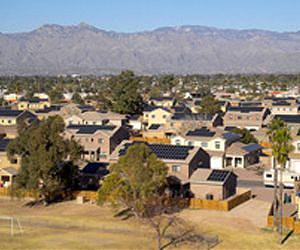
The UK government is considering amendments to planning guidelines that will give local councils and residents the power to veto the development of large solar farm projects.
According to Trina Solar's Richard Rushin, now is the time to reiterate the enormous upsides that such installations can have – not just for the farmers who reap direct financial benefits, but also for the wider rural communities that are generally lagging behind metropolitan areas in the country's nascent economic recovery.
Responding to Barker's comments, Rushin, UK Sales Director at Trina Solar, said: "It has been suggested that councils too often give too little weight to community interest and visual impact when approving planning applications for solar farms. Obviously, there is a need for sensitivity and discretion where areas of outstanding natural beauty are concerned. But councils already have the flexibility to deny planning permission or request amendments to projects that they feel infringe too much on the local landscape.
"The economic downturn has hit agriculture particularly hard, and many farmers are finding that they are having to diversify in order to keep their operations sustainable. Farming has always been about making the best use of your land – whether for crops or livestock – and the current trend for large-scale solar arrays is simply a modern example of farmers adapting to survive," he continued.
"Furthermore, it is important to look beyond the bald financial facts of the subsidies farmers stand to gain from. The benefits of solar farms filter through the whole rural economy – surplus energy generated can be used to power local amenities, and the industry around the installation and maintenance of solar farms creates jobs for people who may otherwise have had to move to cities to find work.
"Certainly, the need for sustainable energy supplies should not always override environmental protections and local concerns for the landscape and the economic benefits that it may itself bring. But it is all too easy to dismiss solar farms as a 'blight' on the countryside. Councils should encourage responsible installations, which are considerate of local concerns, and emphasise the importance of ensuring the economic benefits permeate through the wider community," Rushin concluded.
