
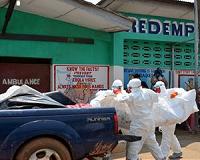
Liberia's Ebola crisis is battering the economy of a nation that has spent the past decade recovering from 14 years of civil war, its minister of commerce said Tuesday.
"The road ahead is not very clear, as our entire development agenda is at risk," said Axel Addy, who was in Geneva for a UN meeting.
"All that we've achieved is at risk should this epidemic continue," he told reporters.
Liberia has been hit the hardest by the worst-ever outbreak of Ebola, which has killed more than 3,000 people in west Africa.
The latest UN data released Saturday said 1,830 people have died from the killer virus in Liberia so far, and 3,458 people have been infected.
Authorities now fear the crisis will derail the impoverished state's drive to recover from 14 years of civil war, which by the time it ended in 2003 had claimed 250,000 lives.
Before the epidemic, Liberia had notched up strong growth of more than 9.0 percent per year since 2005, rising as high as 15.7 percent in 2007, according to World Bank figures.
"I've been privileged to see a country rise from the rubble of war to peace, to a nation where we see our children going to school, roads being paved," Addy said.
"Ebola has interrupted that severely," said the California-raised minister, whose family fled to the United States in 1989 when he was a child, and who returned in 2005.
Liberia, whose longstanding key export, rubber, has more recently been joined by iron ore, relies heavily on commodity exports.
But with commodity prices falling or flatlining, Addy said the country was already feeling the pinch before the deadly Ebola virus struck in March after spreading from neighbouring Guinea.
"The onset of the Ebola crisis has exacerbated this even further," he said.
Liberia has slashed its economic growth forecast for this year to 2.5 percent, from 5.9 percent, as international mining groups have mothballed operations and farmers cannot get their crops to market.
Government revenues, already dented by the slowdown, are now under massive strain from the cost of fighting the outbreak.
Food prices have also come under pressure as the northern region of Lofa, the bread-basket of the nation of some four million, has been one of the worst-hit by the outbreak, said Addy.
"Farmers' ability to harvest their crops and get it to market has been a challenge," added the minister.
"Transportation services have been hit dramatically, so commerce has been challenging and also has triggered price increases of some key essentials."
Imports of rice, a staple in Liberia, which consumes six million tonnes annually, have become increasingly costly amid the Ebola crisis.
