
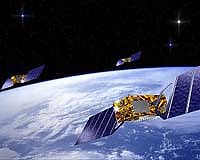
The European Commission has refused to rule out using the future Galileo satellite navigation system for military aims, saying it was "open" to debate about the programme's uses. While insisting that the programme would be civilian-run, spokesman Michele Cercone said: "Debate remains open on applications and possible uses."
"Since it is quite known that militaries are also using positioning signals we should not exclude from debate this aspect," he told journalists.
Galileo is a civilian programme and originally no military uses were planned for it, unlike the existing U.S.-run Global Positioning System (GPS) which was built for the U.S. military but is now widely used for commercial purposes too.
The Galileo project represents an investment of 3.8 billion euros (4.8 billion dollars), which has prompted the E.U. to seek financial partnerships with other countries.
The new system is expected to be more accurate than GPS, giving mariners, pilots, drivers and others an almost pinpoint-accurate navigational tool.
The commission aims to sign contracts before the end of the year with companies that will operate the system over a 20-year period.
