
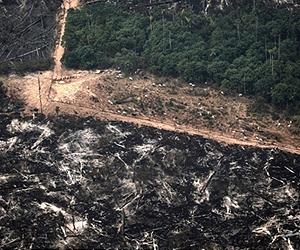
Hundreds of wildfires fed by weeks of relentless drought have forced authorities to place 15 of Brazil's 26 states under an environmental emergency, the official Agencia Brasil news agency said Tuesday.
The decree, which includes the capital Brasilia, authorizes federal emergency plans and funds to fight some 1,200 wildfires threatening indigenous reservations, farms and across the country, according to Agencia Brasil.
Brazil's Amazon basin forest and the Pantanal area, both home to a rich variety of flora and fauna, are experiencing the worst drought since 1973, with more than 80,000 people having to depend on government-supplied food and water, officials said Monday.
In mid-August, the drought triggered as many as 12,000 wildfires.
earlier related report
Drought in Brazil's Amazon basin forest, Pantanal
Rio De Janeiro (AFP) Sept 6, 2010 –
Brazil's Amazon basin forest and the Pantanal area, both home to a rich variety of flora and fauna, are experiencing a severe drought, officials said Monday.
After record floods last year due to a historic rise in water levels in the Amazon River, several communities in western parts of Amazonas state are now isolated due to a drought. Officials are already calling it the worst drought since 1973.
The Jurua River in the Amazon is now practically dry, hampering navigation on its waters.
"The Jurua's water levels have fallen dramatically. Here, in Itamarati, we are only 60 centimeters (1.97 feet) from the worst drought in 2005," the city's mayor, Joao Campelo, told O Globo.
Campelo said local watermelon, manioc (cassava root) and fruit plantations had been particularly hard hit.
Other cities and towns like Envira, which also usually depends on the waters for trade and commerce, have declared states of emergency. The regional government is due to send food and water to the more than 80,000 people estimated to have been affected by the disaster.
These communities can now only be accessed by foot through paths in the forest.
In Pantanal, a vast swampy region in central-western Brazil, waters have dropped dramatically in the Chacore Bay, the third largest in the country.
Share This Article With Planet Earth
