
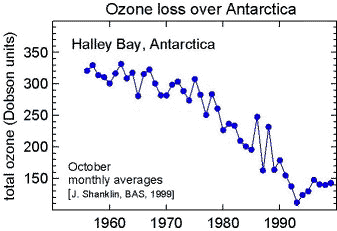
Satellites have recorded a dramatic thinning of the ozone layer over Antarctica over the past two weeks, a United Nations agency reported Tuesday.
"The latest satellite observations in the sunlit portion of the Antarctica perimeter show an average decrease of about 30 percent in the total amount of ozone overhead, when compared to the 1964-76 norms," the Geneva-based World Meteorological Organisation reported.
File Photo: SpaceDaily/CSIRO – previous article use
"This is double the 15 percent (decrease) reported two weeks ago and is unusual for this early period," the WMO said.
"The sunlit region surrounding Antarctica continues to have considerably less ozone than normal."
Last September, the WMO reported that the so-called Ozone Hole over Antarctica was the biggest ever recorded for the month. Its surface covered an area two and a half times the size of Europe.
Depletion of the ozone layer, located in the stratosphere, allows more ultra-violet radiation from the Sun to reach the Earth's surface, potentially causing an increase in the incidence of skin cancer, sunburn and cataracts.
Man-made compounds released into the atmosphere, such as chlorofluorocarbons (CFCs) halons and bromides, are the chief cause of ozone layer destruction.
The Ozone Hole is now closely monitored by satellites and ground-based instruments after it was first spotted by British Antarctic scientists in the 1970s.
The first global agreement to restrict CFCs came with the signing of the Montreal Protocol in 1987, ultimately aiming to reduce them by half by the year 2000.
It was anticipated that these curbs would lead to a recovery of the ozone layer within 50 years of 2000, but recent investigations suggest the problem is perhaps on a much larger scale than anticipated.
The Ozone Hole is a separate issue from global warming, in which the Earth's atmosphere is being gradually heated up by emissions caused by the burning of fossil fuels.
Upper Atmosphere Research Satellite
International Campaign Observes Significant Arctic Ozone Loss
