
More than 1,000 remote-sensing scientists from around the globe will converge at the Colorado Convention Center July 31 to Aug. 4 to exchange ideas and practices at the 2006 International Geoscience and Remote Sensing Symposium.
The meeting, jointly hosted by the Institute of Electrical and Electronic Engineers and the Canadian Remote Sensing Society, will explore the theme, "Remote Sensing: A Natural Global Partnership."
Discussions will include global warming in the Arctic, Antarctic and closer to home, developing advanced flood and tornado prediction systems, and tracking dust storms across Africa to understand their influence on hurricanes.
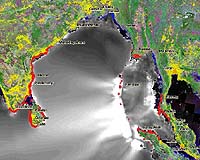
Other topics will range from measuring soil moisture and weeds in crops to lessons learned from the 2004 Indian Ocean tsunami and thermal monitoring of the world's active volcanoes. The meeting will focus on the world's satellite systems used for monitoring all aspects of the global environment, including temperature, pollution and the biosphere.
"Each year, as populations in all regions of the world grow in number and standard of living, we also increase strains on the Earth's natural resources and our sociopolitical systems," said V. "Chandra" Chandrasekar of Colorado State University in Ft. Collins, co-chairman of the conference.
"Optimal management of our environment, improved public safety and sustained prosperity increasingly depend on timely and accurate information on a number of global and regional environmental factors," he added.
