
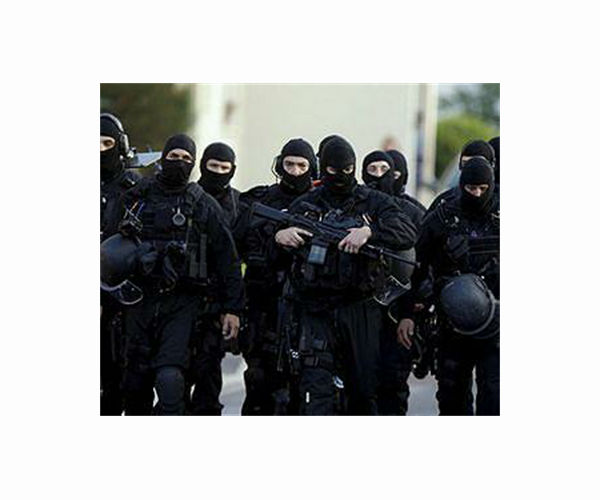
According to a new study, demilitarizing U.S. police departments doesn't lead to an uptick in crime or jeopardize police safety.
In the aftermath of the Sept. 11, 2001, attacks, many police departments began acquiring armored vehicles, body armor and other types of military grade weapons and equipment with funding from the Department of Homeland Security.
Militarized police units have since become commonplace, researchers say. This summer, units armed with helmets, shields, tear gas and rubber bullets were frequently deployed to break up protests sparked in response to deaths of civilians, like George Floyd, at the hands of police officers.
Police advocates claim the transfer of surplus military equipment to law enforcement has led to reductions in crime, but new research suggests studies claiming to show such as effect have relied on faulty data.
According to the latest research — published Monday in the journal Nature Human Behavior — officials have failed to keep accurate records of federally subsidized weapons and equipment acquisitions, making it difficult to reach solid conclusions about the effects of such acquisitions on crime and public safety.
When University of Michigan researcher Kenneth Lowande analyzed more than 3.8 million archived federal inventory records, he found more than 15,000 items went missing from agency inventories over a three month period. More than 4,000 were received for transfer.
For comparison, Lowande looked at the hundreds of police departments that were demilitarized under the Obama administration in 2015 — a practice that has been stopped and criticized by the Trump administration.
Lowande found no correlation between seizures of military equipment and crime rates.
The data also failed to show a relationship between demilitarization and police safety. In other words, the data suggests military equipment has no impact on the effectiveness of local police departments.
Police with access to military grade weapons and equipment aren't any safer than police without military gear, according to Lowande's data.
"When you examine crime and officer safety statistics in these demilitarized departments and compare them to similar departments that weren't impacted, you find essentially no differences," Lowande, a faculty associate at the Center for Political Studies at the University of Michigan's Institute for Social Research, said in a news release.
"I find little to no evidence that demilitarization had an impact on violent crime or officer safety," Lowande said. "Put differently, contrary to the claims of those who support the transfer of equipment, these data do not support the conclusion that militarization saves lives — or that demilitarization risks them."
