
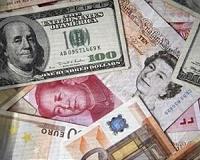
China is in talks with the International Monetary Fund for the Washington-based institution to add the yuan to its basket of reserve currencies, a top banking official said Thursday as Beijing seeks a greater global role for the unit.
It hopes the yuan will become part of the IMF's "special drawing rights" (SDR) assets "in the foreseeable future", said vice central bank governor Yi Gang.
At present, SDRs are made up of only the US dollar, the euro, the Japanese yen and the British pound.
But Yi said China's rise to become the world's second-largest economy had made the yuan, also known as the renminbi, the world's second largest trade financing currency and sixth most widely used transaction currency.
Including the yuan in SDRs will "undoubtedly" make the IMF's unit more "representative" of the global economic landscape, said Yi, who is also head of the State Administration of Foreign Exchange.
"We are evaluating the matter and actively communicating with our colleagues at the IMF," he told reporters on the sidelines of the Communist-controlled National People Congress legislature.
The global lender's executive board reviews the basket composition every five years, with the next examination set to take place this year.
Criteria for inclusion in SDRs include both how widely a currency is used, and that it is "freely usable".
China still keeps a tight grip on the yuan's value, controls which led the IMF to disqualify the yuan in its last review in November 2010, but Yi said it was "developing in the direction of a freely usable currency".
"We hope our colleagues at the IMF will take into sufficient account the progress in the international use of the yuan and include the yuan into the SDR's currency basket in the foreseeable future," he added.
The country has set up yuan clearing arrangements with 10 countries and regions and signed currency swap agreements with 28 central banks.
Calls for the yuan to be included into the SDR basket emerged in the wake of the global financial crisis and disgraced former IMF chief Dominique Strauss-Kahn in 2011 said such a move would promote monetary stability.
But the IMF said later in the year that it was not prepared to adjust the formula.
China bank lending slowed in February
Beijing (AFP) March 12, 2015 – China's bank lending and broader credit growth declined in February from the previous month, the central bank announced Thursday, though analysts said the figures remained robust amid ongoing monetary easing.
Domestic banks extended new loans of 1.02 trillion yuan ($163 billion), the People's Bank of China (PBoC) said in a statement, down from 1.47 trillion yuan in January.
January's figure had more than doubled from December, boosted by seasonal factors and monetary easing.
Despite the month-on-month decline, the lending figure "was stronger than most had anticipated", Julian Evans-Pritchard, China economist at Capital Economics, wrote in a note, adding it beat his firm's expectation of 700 billion yuan.
"The fall reflects the usual seasonal pattern — lending typically surges in January when banks receive fresh loan quotas before falling back in the following months," he said.
China's gross domestic product (GDP) expanded 7.4 percent in 2014, the slowest pace in 24 years, and last week it cut its annual growth target to "approximately 7 percent".
The PBoC cut deposit and lending rates in November to facilitate credit expansion and boost the economy.
In February it also lowered the reserve requirement ratio (RRR), the amount of money banks must put aside as reserves, to encourage lending.
The PBoC followed up those moves with further easing, cutting deposit and lending rates again effective at the beginning of this month.
Zhou Xiaochuan, the central bank governor, provided no hint of further steps at a press conference on Thursday, describing monetary policy measures taken so far as "appropriate" and the overall stance as "stable".
The central bank also said Thursday that total social financing — a broader measure of credit in the economy — totalled 1.35 trillion yuan for February, down from the previous month's 2.05 trillion yuan.
The median forecast in a survey of economists by Bloomberg News was for a total of 1.0 trillion yuan.
"We see that further monetary policy easing is still highly needed in China, in order to counter the economic slowdown, head off the deflation risk and facilitate the undergoing de-leveraging process," ANZ economists Liu Li-Gang and Zhou Hao said in reaction to the figures.
They added that they expect the PBoC to further cut the deposit interest rate by another 0.25 percentage point this year and reduce the RRR again as early this month.
