
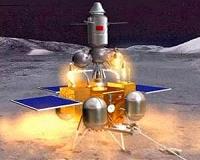
China's experimental lunar orbiter, which blasted off just over a week ago, entered the moon's orbit as part of an eight-day mission. The trial run paves the way for a mission in 2017 to collect lunar samples and bring them back to Earth.
The lunar project is divided into three key stages: orbiting, landing on the moon's surface and returning to Earth.
The orbiter is a precursor to the last phase of China's three-step lunar probe project.
The mission aims to collect lunar data and samples and validate technologies like navigation and control systems.
The technology used in this test mission will be used for the ambitious Chang'e-5 project, set to take place in 2017.
This is China's first orbiter capable of orbiting the moon and returning to Earth, but there remain important challenges ahead.
Flight planners must ensure the test orbiter reaches just the right speed at the right time if it's ever to return to Earth. If the orbiter moves too fast, engineers risk losing control of it.
Experts say each of the mission's three stages are closely linked.
The two first stages took years for China to achieve.
In 2007, the Chang'e-1 mission successfully orbited the moon, captured three-dimensional images of lunar landforms as well as maps of geological structures.
Then last year, during the Chang'e-3 mission, China's first rover "Jade Rabbit" landed on the moon's surface and sent data back to Earth.
The third stage — collecting lunar soil samples and brining them back to Earth — is the next and final objective.
