
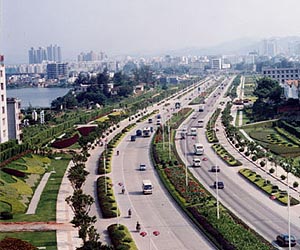
China on Monday unveiled new rules to curb land hoarding by developers, its latest efforts to pop a feared speculative bubble in the nation's soaring real estate sector.
Developers will be banned from bidding for more properties if they have lands idle for more than a year, illegally transferred lands, or developed land in breach of agreements, two Chinese ministries said.
Local governments must give priority to land development projects centred on the building of affordable homes, the Ministry of Land and Resources and the Ministry of Housing and Urban-Rural Development said in a joint statement.
They reiterated that at least 70 percent of land supplies should be set aside for public housing or smaller apartments.
Local authorities that fail to meet the target will be barred from offering land for luxury housing, the statement said.
Beijing has imposed a range of measures since April, including higher down-payment requirements and mortgage rates, to prevent the real-estate sector from overheating and causing a bubble analysts say could derail the economy.
Transactions were relatively muted due to these measures until mid-August, but analysts have warned the surge in transaction volumes in recent weeks suggests there may have been a renewed increase in speculation.
China Vanke, the nation's largest property developer by market value, fell 3.80 percent on the news in early trade Monday before rebounding 0.6 percent into positive territory in the afternoon, sitting at 8.20 yuan (1.22 dollars).
earlier related report
After milk scandal, China orders melamine buyers to register
Beijing (AFP) Sept 27, 2010 –
China has moved to step up oversight of sales of a toxic chemical blamed for the deaths of six babies in a 2008 tainted milk scandal, ordering buyers to register their names, state media said Monday.
The new rules were announced by the nation's State Council, or cabinet, which also called on dairy manufacturers to keep records of all raw materials purchased, the official China Daily newspaper reported.
Melamine, an industrial chemical normally used to make plastic, was responsible for the six deaths and for sickening 300,000 other babies after it was added to powdered milk to make it appear higher in protein content.
The practice was uncovered in 2008, causing a huge scandal. Since then, though, melamine has been discovered in more milk products despite repeated government pledges to clean up the industry.
In July, authorities said they had found 25,000 tonnes of milk powder tainted with melamine earlier this year.
According to the State Council notice, dairy firms are also required to conduct melamine tests on all products before putting them on the market, the report said.
"In cases of delayed crackdowns against illegal dairy production dens or re-emergence of melamine-tainted milk products, local governments should be held accountable," the notice said.
Share This Article With Planet Earth
