
A 5.6 magnitude earthquake rattled the San Francisco Bay region late Tuesday giving a new reminder of its vulnerability to a much-forecast "Big One".
No injuries or damage were immediately reported from the 56 second quake which was felt across northern California.
But though it was only described as moderate by the US Geological Survey (USGS), it was the biggest seismic shock since San Francisco was hit by a 7.1 magnitude quake in 1989 that killed 63 people and destroyed a major bridge, California media reported.
Merchandise rolled off store shelves, the area subway railway stopped for several minutes and regional trains slowed down as a precaution following the latest quake, the San Francisco Chronicle newspaper reported.
The quake's epicenter was 5.7 miles (9.2 kilometers) below ground, near the town of Alum Rock, some 50 miles (80 km) southeast of San Francisco, USGS reported. It struck at 8:04 pm (0304 GMT Wednesday).
The epicenter was close to the the Calaveras Fault, one of at least 10 earthquake faults running through the San Francisco Bay region.
Local reports said the shock was felt as far away as the city of Eugene, in the northwestern state of Oregon.
Seismic experts in 2005 warned there is a 62 percent chance of an earthquake measuring at least 6.7 on the Richter Scale of hitting San Francisco in the next 30 years.
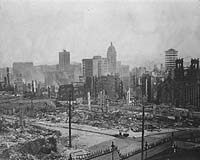
San Francisco suffered a 7.8 magnitude quake in 1906 which triggered widespread fires and killed more than 3,000 people. Tens of thousands lost their homes.
related report
Powerful quake rocks Northern Marianas
A powerful 7.2-magnitude earthquake shook the US-administered Northern Mariana Islands Wednesday but there were no early reports of casualties or significant damage.
Buildings in Saipan, the main island of the Northern Marianas, swayed and lights swung during the quake, centred about 400 kilometres (250 miles) north.
The Pacific Tsunami Warning Centre said no Pacific-wide tsunami was expected.
In September, the Northern Marianas were also shaken by a big quake with a magnitude of 6.9, which was also centred away from population centres.
Earthquakes and volcanic activity are common in the area, which is part of the Pacific "Ring of Fire" quake zone.
Source: Agence France-Presse
