
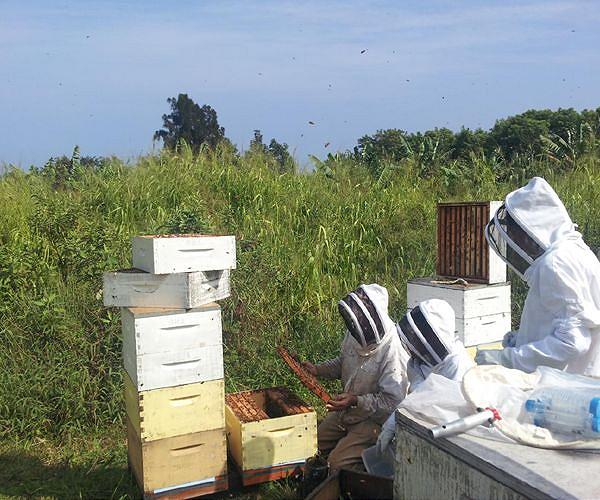
Beekeepers lost nearly 50% of their managed colonies last year, the second-highest rate of loss on record.
The preliminary results of a 2022-2023 National Colony Loss Survey by the Bee Informed Partnership found that beekeepers lost more than 48% of their colonies in the year ending on April 1. The survey was first conducted in 2007.
Honey bees naturally produce six products that are consumed in various ways, including for nutrition, according to the Food and Drug Administration. Their most significant contribution to the environment, and the agriculture sector, is as pollinators. It is estimated that bee pollination accounts for about $15 billion in added crop value.
Winter losses were the second highest since the 2018-2019 year. The summer loss rate was about 1% higher than last year at more than 24%.
Backyard beekeepers experienced the worst losses. More than 54% of backyard bee colonies died compared to about 48% of commercial colonies. However, it was an average year for backyard beekeepers and a high-loss year for the commercial beekeeping industry.
"Although the total number of honey bee colonies in the country has remained relatively stable over the last 20 years — loss rates remain high, indicating that beekeepers are under substantial pressure to recover from losses by creating new colonies every year," the report reads.
The varroa destructor was the leading cause of death followed by weather and starvation. The varroa destructor is a pest that is present throughout North America, South America, Europe Asia and parts of Africa.
The survey sample included 3,006 beekeepers managing 314, 360 colonies across the United States — about 12% of managed honey-producing colonies.
The Bee Informed Partnership is a nonprofit organization focused on preserving and improving the health of the honey bee population.
