
BAE Systems and Leonardo signed a Memorandum of Understanding to cooperate on future threat detection projects for the U.S. Army's aircraft.
Under the agreement, the two companies will utilize their assets to develop a new detection platform powered by infrared technology. Officials say the pact will help the branch meet current and evolving threats for both rotary and fixed-wing aircraft.
"By merging Leonardo DRS' extensive infrared sensors expertise with our proven threat warning capabilities, we're able to offer survivability solutions not available today," BAE Systems' Paul Markwardt said in a press release.
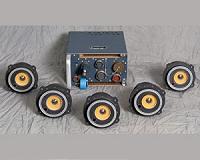
The new solution will serve as a follow-up for the existing AN/AAR-57 Common Missile Warning System, or CMWS, the standard platform used by the Army's planes and helicopters to avoid incoming threats.
Over 2,100 CMWS systems have been installed around the globe. It has seen more than 2 million flight hours in combat environments. Leonardo representatives are confident they can offer an even more effective product alongside BAE Systems.
"We offer an extremely advanced and accurate sensor that can take BAE Systems' threat detection systems to the next level," Leonardo's Shawn Black said. "Our long-range missile launch detecting capability provides crews with increased warning time, greatly improving their ability to respond and survive — and that is our ultimate objective."
Russia conducting munitions tests for T-50 aircraft
Russia began testing the weapons for its 5th-generation stealth fighter with plans to complete the trials in 2017, according to state media reports.
The Sukhoi T-50 aircraft, also referred to as the PAK FA, is being designed to have similar capabilities as the Eurofighter Typhoon and the Lockheed Martin F-22 Raptor. The F-22 is also marketed as a 5th-generation stealth platform.
… read more
