
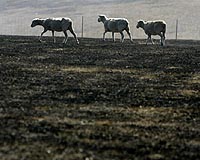
A judicial inquiry into wildfires that killed 173 people in Australia opened Monday with strong criticism of the warnings given to residents as flames bore down on their homes.
Entire towns and more than 2,000 homes were razed in early February as record high temperatures, strong winds and drought-parched countryside combined to create the worst fire disaster in Australia's history.
Former Supreme Court judge Bernard Teague heads a royal commission into the fires aimed at finding out how the blazes raced out of control so quickly and why the death toll was so high.
Counsel assisting the commission Jack Rush, who acts as the chief prosecutor in the inquiry, opened proceedings with an attack on the warning systems set up to alert residents to fire danger.
Rush said victims of February's firestorms had no hope of anticipating the impending catastrophe because warnings on the day were insufficient.
"Evidence to be placed before the royal commission will indicate that the system of communication of warnings did not cope on February 7, 2009," he said.
Rush said the flames were so intense that they could not be fought but evidence suggested that timely information about their intensity was not available to residents.
"People remained in their homes unaware of the approaching fires until it was too late," he told the court.
Rush said the only warning on the day was an extreme fire danger alert, a relatively common occurrence during the Australian summer.
"Such general warnings (are) not a trigger to go early," he said.
He said Australia gave residents a choice about whether to stay and defend their properties or evacuate, while other countries with high wildfire danger viewed compulsory evacuations as the safest emergency option.
Rush said the inquiry would examine a range of issues including safety warnings, the adequacy of hazard reduction burn-offs and building regulations.
It is due to present interim findings by August.
Share This Article With Planet Earth
