
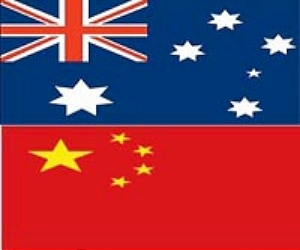
Australia Thursday denied the arrest of Rio Tinto executive Stern Hu had ever disturbed trade ties with China, citing a record gas deal signed on the last day of his trial.
Trade Minister Simon Crean said the 20-year contract to supply liquefied natural gas (LNG) to the state-run China National Offshore Oil Corporation (CNOOC) heralded an era of long-term mega-deals between the two countries.
"Australia is very much the Saudi Arabia of gas," Crean told Bloomberg Television. "It's a cleaner energy source, and China is looking to cleaner fuel options, longer-term commitments to energy security."
The deal, Australia's largest-ever LNG export contract by volume, coincided with the end on Wednesday of Hu's politically sensitive trial on bribery and trade secrets charges in Shanghai, some of which was heard behind closed doors.
Crean repeated warnings by Prime Minister Kevin Rudd that the "world was watching" the case, which is being widely viewed as a test of the rule of law in China and risks of doing business there.
But he said: "Has it impacted on the broader economic relationship? No.
"I think that the evidence of the big deal being signed yesterday demonstrates that the trade is very strong."
Treasurer Wayne Swan said he didn't believe relations with China were "ever off track".
"Business has been going ahead with China at a pretty fast pace for the whole time we have been in government," Swan said.
"There are issues that arise from time to time, important issues about the national interest test in foreign investment, and, of course, the issue of Stern Hu.
"But the fact is the economic relationship between Australia and China has been growing right through that period," he added.
China displaced Japan as Australia's largest trading partner last year, and Crean said the "strength of the economic relationship will continue to grow".
He expressed confidence in recently resumed free trade negotiations with Beijing and said there were "incredible opportunities" to broaden two-way ties going forward.
"It's not only in China that this opportunity exists. It exists in the whole of Asia, it exists in India," added Crean.
"We have increasingly positioned our presence in the broad Asian region and that's where opportunity rests for us."
Relations with China, the world's third-largest economy, plunged after Hu's arrest last July but have recovered since the charges were eased from spying and stealing state secrets. His trial in Shanghai ended without an immediate verdict Wednesday.
Hu and three Chinese colleagues admitted accepting some bribes, and one admitted to commercial espionage, according to defence lawyers, although the accused challenged aspects of the charges.
They were arrested in July during contentious iron ore contract talks between top mining companies and the steel industry in China, the world's largest consumer of the raw material. The talks eventually collapsed.
Crean said Australia had to "accept the circumstances in which people have been charged in China, and recognise the sovereignty of the Chinese legal system".
"I think the world is still watching," he said. "It wants to know the outcome. It wants to know the basis on which that outcome was arrived at.
"Until we see the record of the court, it's too early to judge."
China has insisted the case was being handled in accordance with law and consular agreements, and that it is keeping Australia informed about the proceedings.
Share This Article With Planet Earth
