
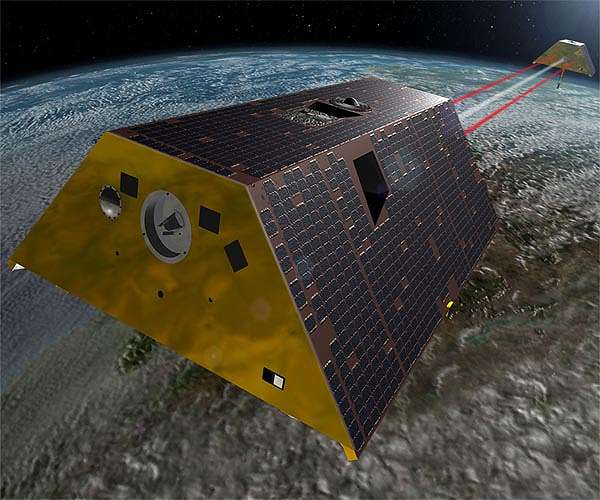
NASA's Jet Propulsion Laboratory (JPL) in Pasadena, California, has contracted Airbus for the design and construction of the GRACE-C (Gravity Recovery And Climate Experiment-Continuity) twin spacecraft. This venture reinforces the longstanding partnership, exceeding two decades, between the United States and Germany, initiated by GRACE in 2002 and followed by GRACE Follow-On in 2018. The collaboration is dedicated to the continuous measurement of Earth's gravity field, critical for monitoring our planet's climate dynamics.
The GRACE-C mission, with a projected five-year lifespan, aims to extend the legacy of its predecessors by tracking the month-to-month shifts in Earth's groundwater, oceans, ice sheets, and land masses through precise gravity field measurements. Alain Faure, Head of Space Systems at Airbus, emphasized the significance of continuity in environmental monitoring, stating, "The success of previous GRACE missions and their invaluable data highlight the importance of our ongoing role in this international mission to chart our changing climate."
Set to launch no earlier than late 2028, GRACE-C will comprise two identical satellites orbiting approximately 200 km apart at an altitude of 500 km. Each satellite, measuring 3 x 2 x 1 meters and weighing around 600 kg, will utilize an advanced microwave ranging system to detect minute distance variations caused by gravitational fluctuations. This system enables the precise mapping of the Earth's gravity field, providing insights into the global water balance, ocean dynamics, and the impacts of climate change with unparalleled accuracy.
The GRACE-C initiative represents an upgrade from GRACE Follow-On, incorporating state-of-the-art avionics and the US-German Laser Ranging Interferometer (LRI) as its primary instrument, building on the experimental success from its predecessor. The mission embodies the collaborative spirit of NASA and the German Space Agency at the German Aerospace Center (DLR), with funding from the Federal German Ministry of Economic Affairs and Climate Action and the Federal Ministry of Education and Research.
Airbus Defence and Space in Friedrichshafen will oversee the satellite design, construction, and delivery to the launch site, including Launch and Early Orbit Phase (LEOP) support for NASA/JPL. The German Space Operations Center (GSOC) of DLR will operate the mission, underscoring the international effort to sustain environmental observation from space.
