
The first legally-binding accord on disarmament adopted at the United Nations in a decade is due to come into force by the end of this year, the world body announced on Tuesday.
The new treaty requiring countries to clear millions of unexploded weapons left after a conflict will become international law on November 12, the UN Conference on Disarmament said.
The green light came after lawmakers in Switzerland and neighbouring Liechtenstein both approved the treaty, which needed to be ratified by at least 20 countries in order to enter into force.
The treaty was finalised in 2003 after more than three years of discussions, and formally is a protocol to the 94-nation UN Convention on Certain Conventional Weapons.
The protocol — which is the first international arms accord since the anti-personnel landmines accord of 1996 — says culprits will bear the responsibility for clearing unexploded weapons from foreign territories they control as a result of war.
It notably covers mortar and artillery shells, grenades, rockets and missiles.
It also includes cluster bombs which the United States unleashed in great numbers in Iraq and Afghanistan, as well as in Kosovo. They are designed to scatter smaller explosive charges which, in theory, detonate when they hit their target, causing horrific injuries.
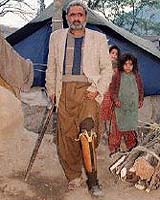
Experts say that up to a third of these bomblets do not explode immediately and continue to put innocent lives at risk, notably children, long after the end of a conflict.
Tens of millions of unexploded munitions from earlier conflicts are also thought to be scattered across dozens of countries.
Explosives from World War I are still discovered almost weekly in parts of France and Belgium, and the problem is also severe in southeast Asian countries such as Laos and Cambodia which were caught up in the US conflict with Vietnam's communists in the 1960s and 1970s.
Campaigners have welcomed the new protocol but have said it may lack sufficient clout to force a genuine clean-up.
They have expressed particular disquiet about the way states might be able to duck their obligations, including a loose definition of who is in "control" of post-conflict territory.
Under the accord, states are meant to record the sites they attack to enable an exchange of information following a conflict — whether they win or lose — but they can invoke "security interests" to withhold such information from other states or groups which are trying to tackle the problem.
Nor does the accord commit states to paying for the damage they cause.
Critics have also pointed to the fact that few major military players, apart from India, have so far signed up to the protocol. Holdouts include the United States and Russia.
