
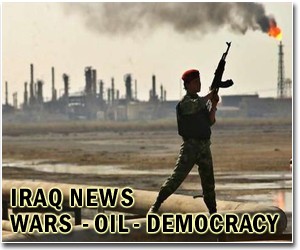
Three bombs exploded Thursday in the south Iraq port city of Basra, killing 19 people, including high-ranking army and police officers, and wounding at least 65, security and medical officials said.
A roadside bomb and a motorcycle bomb exploded simultaneously at about 6:40 pm (1540 GMT) in a market in central Basra, an interior ministry official said.
Following a common pattern in Iraq, a third roadside bomb went off as people gathered at the scene, according to the official, who put toll at 19 killed and 67 wounded.
An army brigade commander and a high-ranking police officer were among the dead, while police and soldiers were also wounded in the blasts, the official said.
Riyadh Abdelamir, the head of the Basra health directorate, said that 19 people were killed and 65 wounded in the blasts.
Army and police deployed in force following the blasts, cordoning off the market, an AFP correspondent said.
It was the deadliest day in Iraq since October 27, when two roadside bombs in Baghdad's Urr neighbourhood killed at least 32 people and wounded 71 others.
On November 2, three motorbike bombings in Basra killed at least nine people and wounded at least 37.
Violence has declined nationwide since its peak in 2006 and 2007, but attacks remain common. A total of 258 people were killed in October, according to official figures.
Iraq executes 12 'Qaeda' members for murder
Baghdad (AFP) Nov 24, 2011 –
Iraq on Thursday executed 12 Al-Qaeda members convicted for the massacre of 70 people at a wedding, although they were officially put to death for other murders, the deputy justice minister said.
The 12 were executed for the murders of cooking gas salesmen, though they were also convicted of involvement in the 2006 wedding massacre, Busho Ibrahim told AFP.
Fifteen people were convicted of the crimes, but "three of them were not executed today because we still have legal procedures to deal with," the minister said.
Firas Fleih al-Jaburi, who was said to be the leader of a cell involved in a string of attacks, was among those executed, Ibrahim added.
Security forces claimed he posed as a human rights activist who fought to improve prison conditions in a bid to elude capture.
Abdelsattar Birakdar, the spokesman for the Supreme Judicial Council, had said earlier on Thursday that 16 people were executed.
Baghdad security spokesman Major General Qassim Atta said in May that "the gas sellers were from Sadr City in Baghdad. They used to come to the Taji area to sell gas to residents."
The Sadr City district in the north of the capital is overwhelmingly Shiite. Taji on the city outskirts is mainly Sunni Arab.
The gas sellers were killed in 2006 and their bodies set on fire, Atta said without specifying how many.
According to police, militants also carried out the systematic killing of a wedding party celebrating the marriage of a Shiite man to a Sunni woman in the Taji area in 2006.
The murders came as confessional violence was raging across Iraq, with tens of thousands killed in 2006 and 2007.
